
After the short trip across the ocean to Canada, Formula 1 returns to the heart of Europe for the Austrian Grand Prix at the Red Bull Ring, the first stop of a demanding summer tour featuring four races in six weeks.
For the first time since 2021, the weekend will follow the traditional format, dropping the Sprint in favor of the usual schedule with three free practice sessions, qualifying on Saturday afternoon, and the race on Sunday. This will give teams more time to fine-tune their setups and, more importantly, to gather data on tire wear and degradation.
A short but tricky track
Measuring just 4.318 km, the Red Bull Ring is one of the shortest circuits on the calendar. Despite having only ten corners, the Austrian track features a highly varied technical layout, with long uphill straights, heavy braking zones, and a fast, flowing final sector. The elevation change of over 60 meters adds to the track’s technical complexity, particularly in traction and braking phases.
The first sector is dominated by two long straights and heavy braking zones, ideal for overtaking thanks to the three DRS zones. The second sector is more flowing and downhill, while the third mixes fast corners and elevation changes that test the car’s balance and stability.

Tires: thermal management more crucial than degradation
Pirelli has confirmed the same compound selection as last year: C3 (Hard), C4 (Medium), and C5 (Soft), leaving out the much-criticized C6 that caused issues in qualifying at both Imola and Canada. Although the Red Bull Ring’s tarmac is relatively rough, wear is not a major concern. The main challenge is thermal overheating, especially at the rear, due to frequent acceleration zones and ambient temperatures that in summer can push track temperatures above 40°C.
The degradation is thermal in nature, requiring teams to manage grip and prevent blistering, especially during long stints on the C4. In the absence of a Safety Car, a two-stop strategy remains the most effective: in 2024, almost all drivers started on Mediums and alternated between Medium and Hard during the race. Historical data shows that overextending a stint on C3 or C4 often compromises pace in the final phase.
Brakes and weather: two key variables to monitor
According to Brembo technicians, the Red Bull Ring ranks as “medium” in terms of brake severity, but the cumulative impact of the three main braking zones (Turns 1, 3, and 4), all uphill and at high speeds, results in high pressure and temperature on discs and calipers, with particular stress at the front.

Additionally, the unpredictable weather of the Styrian region is a factor not to be overlooked: rapid weather changes are common and have frequently affected qualifying or even the entire race day. Forecasts for this weekend indicate a possible risk of intermittent rain between Saturday and Sunday, which could shuffle the pack.
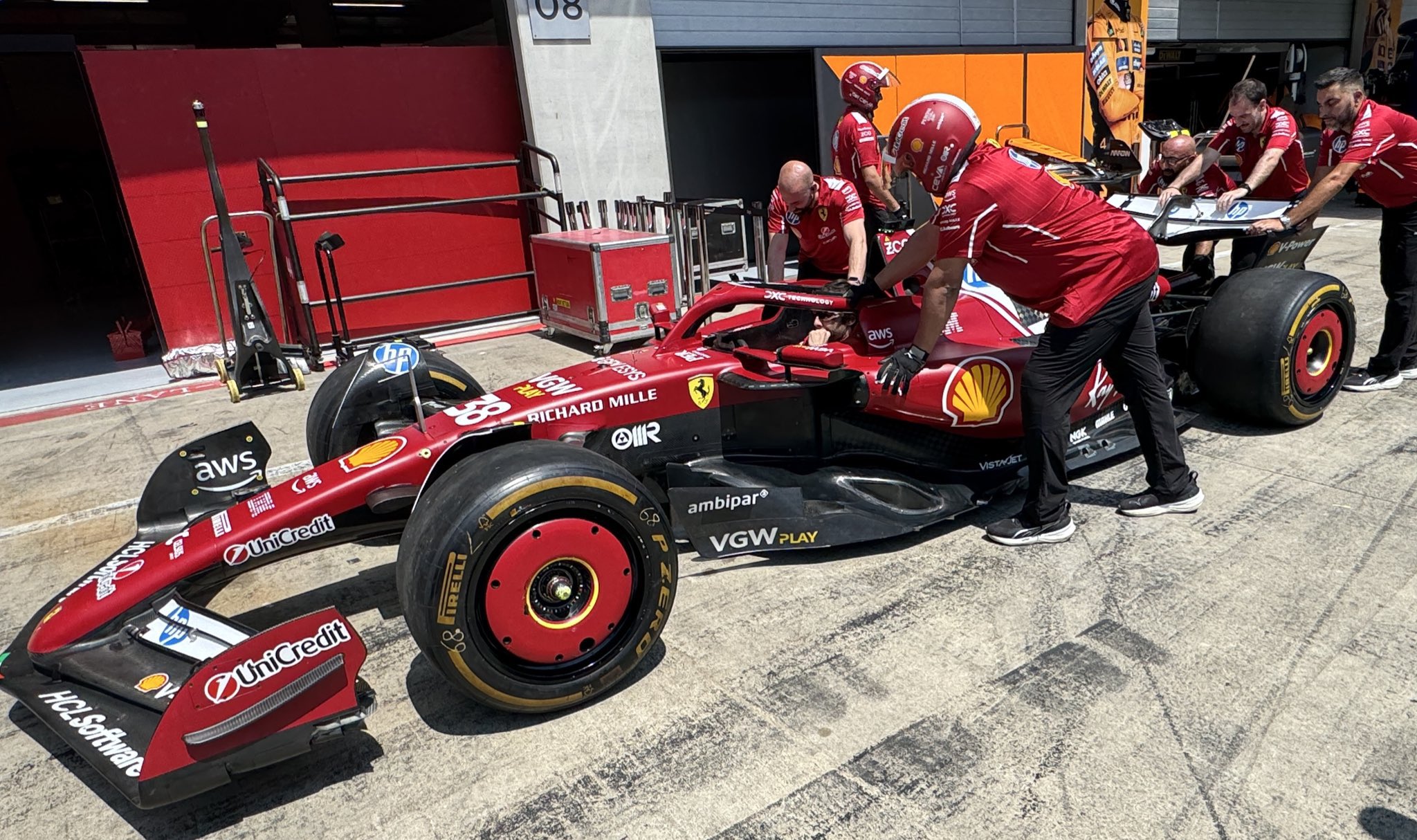
The Red Bull Ring therefore presents a particularly sensitive test for tire management, braking balance, and the ability to quickly react to changing weather. These are all factors to watch closely as the first images emerge from the paddock, along with technical details of the updated cars prepared for this key phase of the championship.
Rear wing comparison
Early indications on setup choices come from the ever-reliable reporter Albert Fabrega, who has just published a comparison of the rear wings used by the main teams.




Leave a Reply