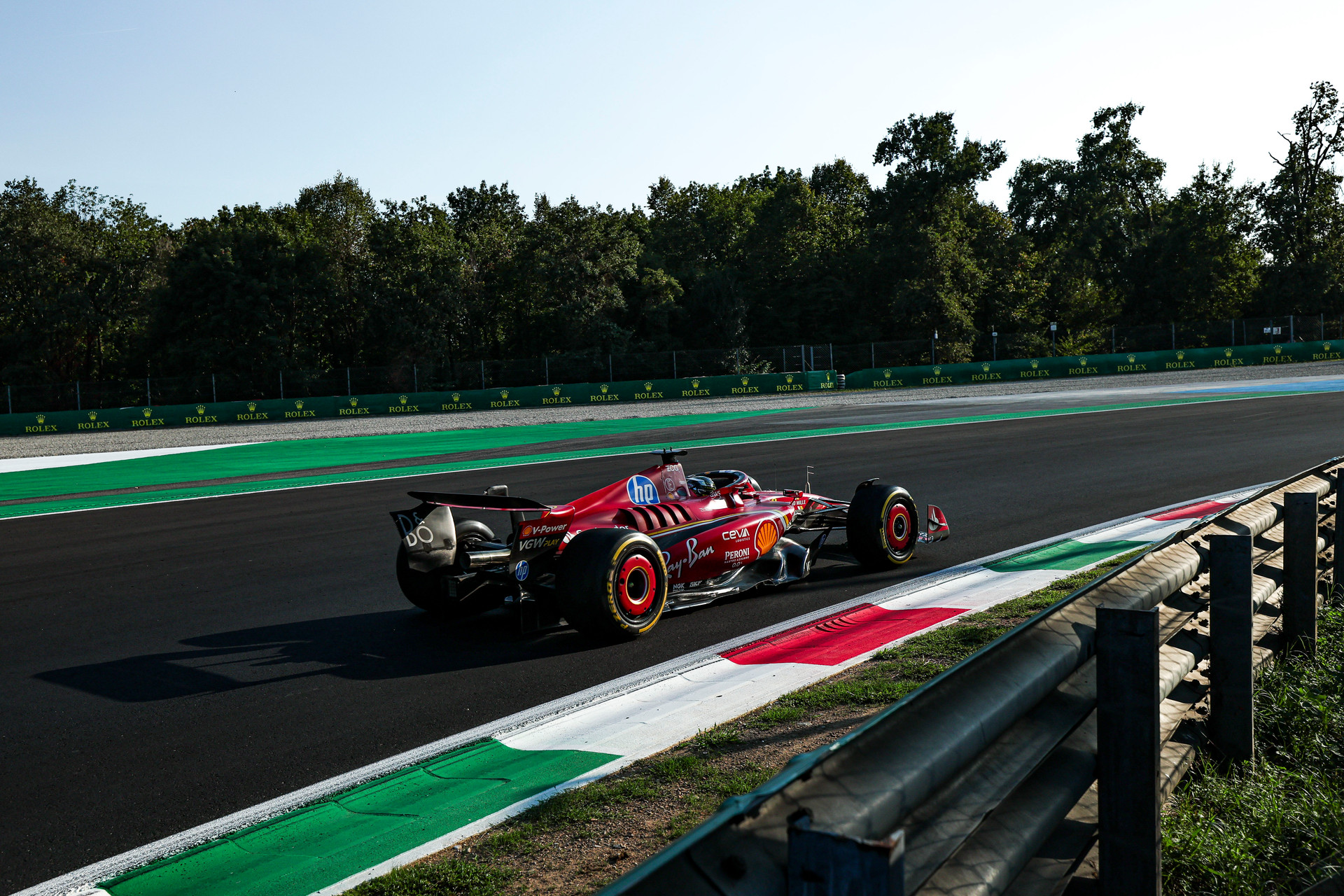
With McLaren taking the spotlight in Zandvoort both on the track and with their development, it’s now Ferrari’s turn to unveil their updates. At their home race, the Prancing Horse introduces an important package of innovations concerning the floor, diffuser, bodywork, and mirrors to return to fighting at the top. The goal is to eliminate the bouncing worsened by the developments at the Circuit de Catalunya in Barcelona, finally allowing the SF-24’s potential to be exploited.
The Monza Updates
The most significant changes on the Red car concern the floor, starting with the renewal of the flow conveyors at the entrance of the lateral Venturi channels. As often happens, however, the changes noticeable from the outside are limited. The most evident innovation concerns the outer edge of the floor, with a gradual extension of the rise that acts as a lateral extractor. Ferrari, however, continues to propose a simpler geometry compared to the competition, though not necessarily less effective.
The changes to the SF-24’s floor converge in the new rear diffuser. In Maranello, the bodywork has also been renewed, with the lower part of the sidepods being carved out more deeply and taking advantage of the interaction between the upper and lower aerodynamics of the car. Finally, there are corrections to the rearview mirrors and the relocation of the front camera anchored to the nose.
Ferrari’s Response
The Maranello representatives define the Monza package as an evolution of the one previously introduced in Spain, without overturning the Prancing Horse’s development philosophy. “I would say that it is largely a reaction to the Barcelona package,” explains senior performance engineer Jock Clear with the press present at the Monza circuit earlier today. “That floor produced much more downforce, but it suffered severely from bouncing, and that’s what we had to react to. In general terms, the development path hasn’t changed. We acknowledged that bouncing was ruining all the developments we were bringing, and that’s what we focused on.”

The SF-24 car has actually been suffering from bouncing since the start of the 2024 Formula 1 season, but the updates in Barcelona exacerbated the problem. The driving difficulties caused by the sudden loss of downforce in fast corners forced the team to compromise the mechanical setup of the suspension, increasing the ride height to prevent bouncing but thus sacrificing the maximum downforce that could be generated from the floor. The goal of the new package is to allow a return to more aggressive ride heights to exploit the untapped potential of the SF-24. “The difficulty lies in the fact that the wind tunnel sees pure aerodynamics and doesn’t detect the bouncing that often gets triggered by the car passing over bumps,” Clear continues. “Our models are improving, and we’re optimistic that now we can exploit a bit more of that aggressive peak load that occurs during bouncing without suffering from it.”
Development Continues
In Monza, the new aero package was used immediately on both cars, with Ferrari not considering it necessary to conduct any comparative testing between the new and old floors. Despite the abundance of high-speed corners, Monza does not represent the ideal test bed for checking robustness against porpoising, and even less so will be the upcoming events in Baku and Singapore, postponing the final judgment on the effectiveness of the latest developments.
However, Frederic Vasseur has promised more updates by the end of the year. It couldn’t be otherwise with a technical regulation that will remain almost unchanged in 2025, making the next cars a direct evolution of the current ones. Meanwhile, in Monza, Ferrari is also introducing a specific package for the Temple of Speed, starting with the new dedicated rear wing. The Prancing Horse is investing decisively in the home race, unlike Mercedes and Red Bull, who are bringing slightly modified versions of the wings from the Circuit de Spa-Francorchamps.



Leave a Reply