The week leading to the Las Vegas Grand Prix, the most anticipated, talked-about, and controversial race of the 2023 F1 season, has finally begun. It is an event, the 21st act of a championship already assigned to the rightful winners, that has been generating more buzz for its glamorous – admittedly a bit kitschy – surroundings than for technical content.
Controversies abound as the Nevada event is a sort of manifesto by Liberty Media Corporation pushing for a vision of Formula One that clashes with the traditional and European-rooted perspective. However, as the engines are about to roar, the focus will inevitably shift to technical matters. Regarding these, as usual, we refer you to our upcoming analysis of the track’s characteristics located between the casinos.
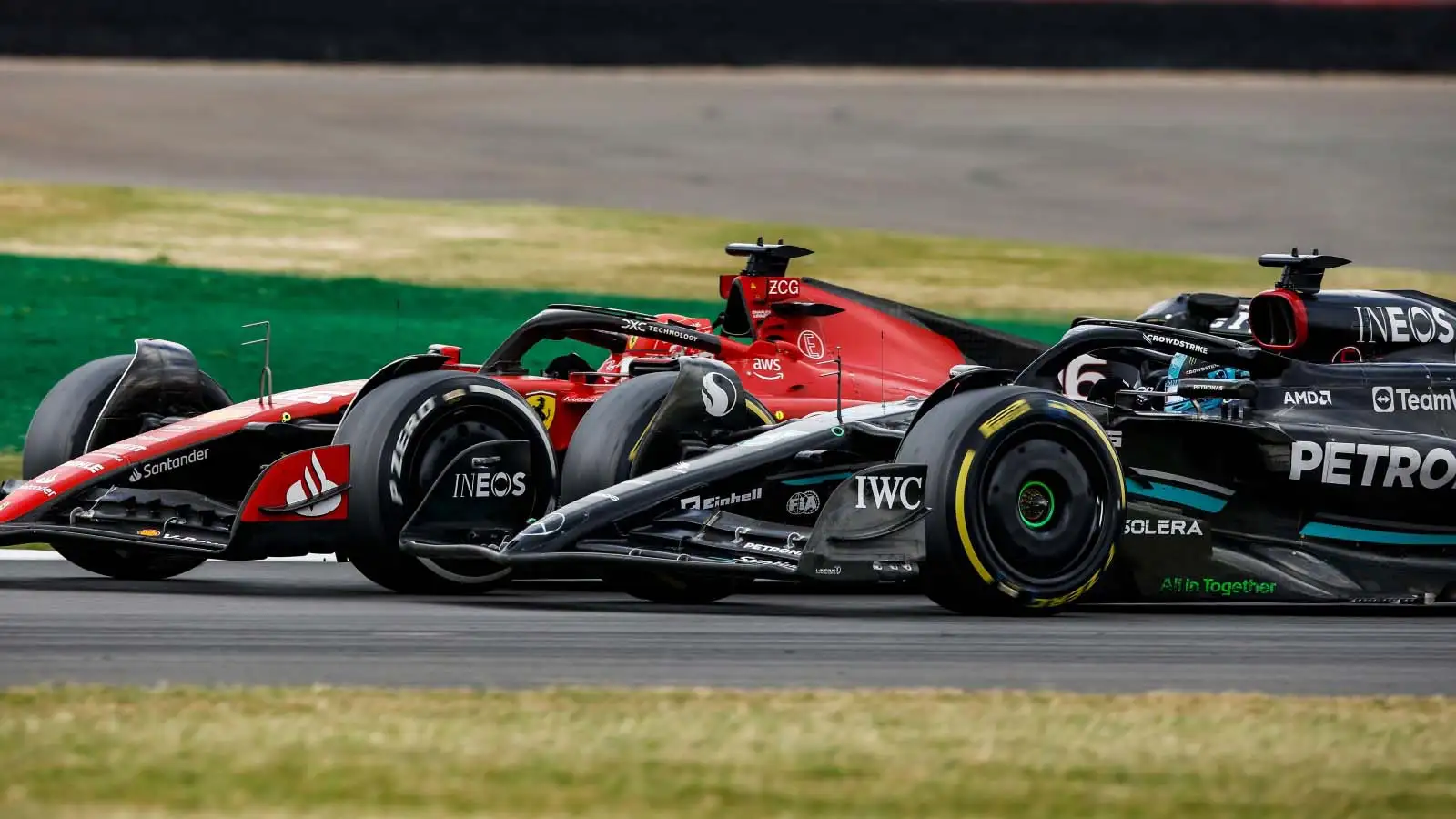
With the major outcomes already decided, the central point now revolves around the battle for the second position, involving Mercedes and Ferrari, separated by only 20 points. A gap that, without moving much, has been observed for several races, with both teams missing opportunities to deliver the final blow to the other.
Las Vegas GP: Ferrari and Mercedes dealing with unpredictable cars
Both teams are hindered by unpredictable cars that, in some circumstances, have not seen their simulator work confirmed. A significant issue when dealing with a new track that presents normal uncertainties. On paper, the layout, nicknamed the “upside-down pig,” as someone sarcastically noted, might be more suitable for the red car than for the Silver Arrow.

When arriving in Brazil, the men of the Prancing Horse were aware of the difficulties they would face, but they were confident that the story could change in Las Vegas. One of the conditioning variables is the ambient temperatures since the sessions will take place practically at night. Another topic that has sparked more than one controversy in an F1 reluctant to accept certain cultural changes.
Frédéric Vasseur is aware of the pitfalls offered by the American track: “Las Vegas will be challenging, but I think everyone expects it to be. It will be a night race, and it will be very cold. It’s a new track with a peculiar layout.” The French manager is not concerned about the safety of the drivers: “We trust F1, and if you look at Miami in 2022, it went quite well from the racing point of view: the track was well prepared, and I hope it will be the same for Las Vegas.”
In addition to the temperatures that are expected not to be very compatible with the characteristics of the cars and especially the Pirelli tires that need a well-defined operating window, the concern revolves around the asphalt. The reference is to what happened last year in Miami, which underwent partial resurfacing, causing more than a headache due to the rather poor quality of the asphalt. Organizers seem to have provided adequate answers to the technical delegates of the FIA, but the teams, rightfully so, do not feel at ease until they have personally assessed the surface of Nevada.

In the Mercedes camp, the fears of a race below expectations are creeping in. Brazil was a resounding flop, the worst weekend of the turbo-hybrid era according to Toto Wolff. In Brackley, they thoroughly analyzed the Paulista event, and it seems that the reasons for the sporting disaster have been understood. “Brazil was probably our most challenging weekend of the season,” explained the team principal of the Anglo-German squad.
“After promising performances in the United States and Mexico, we didn’t perform at our best at Interlagos. We worked hard to identify the wrong path we took with the setup. We understood our mistakes and can explain the disappointing results. This is important to secure the second position in the Constructors’ Championship.”
Understanding mistakes to avoid repeating them. That is Mercedes’ program: easier said than done, and more complex to put into practice. “We have prepared for the challenge of racing on a completely unknown circuit. We have used the few pieces of information at our disposal: we will run at night, with ambient and track temperatures likely to be very low. The layout is unusual as it features many slow corners but also long straights. It will be a great challenge for all of us.”
Toto Wolff, in conclusion, also emphasized the off-track world, which is of fundamental importance in Las Vegas: “It will be a tremendous commitment even outside the sessions. The media interest will be sky-high, and seeing the cars speeding down the Strip will be one of the most exciting moments of the season. The eyes of the sports world will be on F1, and we can’t wait to stage a great show. It will be something truly special to witness.”
Precisely because the eyes of the whole world are watching what will happen inside and outside the American track, it will be necessary to approach perfection to avoid the potential embarrassment from escalating disproportionately. Neither Ferrari nor Mercedes are the favorites in the predictions, which are all in favor of Red Bull, but neither intends to replicate what happened in Brazil.
Who will win the duel? We don’t possess divinatory abilities, but it will certainly favor whoever stops making gratuitous mistakes, like the ones the two teams have too often made in this regretful and missed opportunity-laden 2023. Furthermore, it will be crucial to perform well in simulation with very few elements to rely on. Neither competitor, as recent history teaches, can feel safe. That’s why the contest is more uncertain than ever.
Source: Diego Catalano for FUnoanalisitecnica


Leave a Reply