BoP Is the Law: A Lesson in Endurance Racing for Those Who Do Not Understand the Fundamentals
The Balance of Performance, commonly abbreviated as BoP, is one of the most frequently discussed—and often harshly criticized—elements in the world of modern endurance racing. However, a significant portion of these criticisms come from individuals who are primarily focused on pushing their own biased narratives. These are people who frequently voice strong opinions despite not truly understanding the fundamental principles or the deeper context behind how endurance racing actually works.
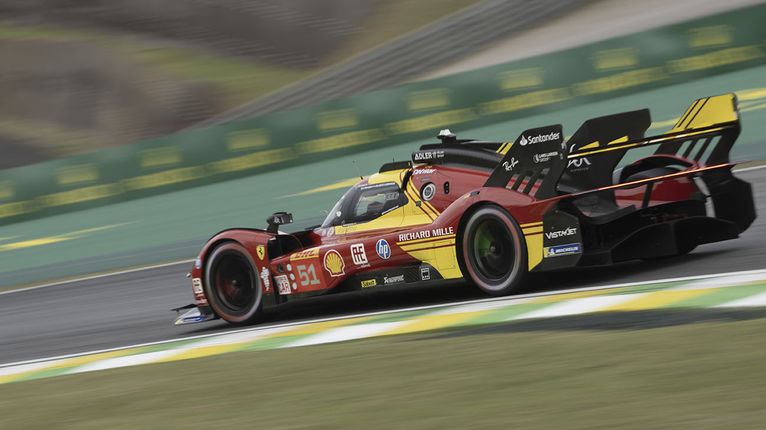
Every single race weekend within the FIA World Endurance Championship (WEC) brings with it the same tiresome narrative: the team that wins, according to detractors, benefitted from a favorable Balance of Performance adjustment, while the team that lost, they claim, was unfairly penalized by the same system. When Toyota Gazoo Racing dominates the WEC, for example, the standard complaint becomes: “The BoP was far too generous in their favor.” Conversely, when Scuderia Ferrari struggles in a specific round—such as when the Ferrari 499P hypercar failed to break into the top ten positions in São Paulo, Brazil—fans react with accusations like: “The FIA has it in for us.”
This repetitive, predictable pattern creates a toxic and irrational cycle of complaints and conspiracy theories that ultimately reveals a deeper issue: far too many spectators are watching endurance racing without actually understanding what they are seeing on track, or how the category functions as a whole.

Understanding the True Nature of the FIA World Endurance Championship
The FIA World Endurance Championship, which is governed by the Fédération Internationale de l’Automobile (FIA) and organized in partnership with the Automobile Club de l’Ouest (ACO), is not to be confused with Formula 1. This championship is not simply about which car is the fastest over a single lap in qualifying conditions. It is endurance racing at the highest level—a discipline where success is built over multiple hours of competition, where teams must demonstrate the ability to manage fuel, tires, and energy systems, to execute complex race strategies, and to deliver strong, consistent performance across changing track conditions.
The Balance of Performance is a key technical and regulatory tool that is written into the official WEC sporting regulations. It is the mechanism that makes it possible for cars built with significantly different technical philosophies and architectures—such as front-engine versus mid-engine designs, naturally aspirated versus hybrid powertrains, or different aerodynamic packages—to compete against one another on a relatively equal level. The BoP is not a gimmick. It is not an optional adjustment. It is an integral and essential part of what makes endurance racing fair, diverse, and competitive.

Every single automotive manufacturer—and we do mean every single one—that signs up to enter the FIA WEC championship knows from the very beginning exactly what they are agreeing to. They are fully aware that their cars will be subject to adjustments in power output, minimum weight, fuel tank capacity, and other key performance variables as determined by the series’ BoP algorithm. These adjustments are not unexpected. They are not part of some shadowy manipulation. They are not the result of a conspiracy designed to favor or punish specific teams. Rather, they are the predictable and transparent outcome of a regulatory system that aims to maintain fair and exciting racing.
The Pointless Game of Mutual Accusations Among Fans
One of the most disappointing and, frankly, absurd aspects of the current state of endurance racing is the behavior of certain fan groups who seem more interested in hurling accusations at one another than in enjoying the sport. When Scuderia Ferrari was dominating in the opening rounds of the 2024 World Endurance Championship season, fans of rival manufacturers were quick to accuse the FIA and the ACO of providing Ferrari with an excessively generous Balance of Performance configuration. Now that the Ferrari 499P has encountered a series of difficult races, and Cadillac Racing has managed to achieve a historic and impressive 1-2 finish, those same critics have suddenly gone quiet.
This selective outrage and shifting standard of judgment reveal the extent to which parts of the fanbase are driven not by logic or understanding, but by tribal loyalty and emotion. It is a childish and destructive game, one that highlights the toxicity and irrationality that has crept into what should be a celebration of technical excellence and sporting achievement.
The reality is that the Balance of Performance system is working precisely as it is intended to work. When a particular car or manufacturer begins to dominate too consistently, the BoP algorithm triggers adjustments to rebalance performance and restore competition. This is not unfairness. It is not victimization. It is simply the enforcement of a well-known and clearly communicated regulatory framework. And if some fans are unwilling—or unable—to accept that, then perhaps it is time for them to explore a different category of motorsport.
What Makes Endurance Racing Truly Unique and Valuable
The real beauty and value of endurance racing does not lie in watching one manufacturer with the fastest car take off from the front of the grid and coast to an easy and unchallenged victory. That sort of dominance might appeal to some Formula 1 fans, especially during eras when teams like Mercedes with Lewis Hamilton, or Red Bull Racing with Max Verstappen, have won multiple races in a row with little challenge. But that is not what endurance racing is about.
In endurance racing, the excitement and drama come from the constant battle among teams with very different technical philosophies and operational strategies. It is about watching how different teams, operating under the same rules but with varying approaches, manage to compete side-by-side. It is about racecraft, long-term strategy, energy deployment, tire management, pit stop execution, and adaptability to changing track and weather conditions. It is about the constant push and pull between performance and reliability.
The Balance of Performance does not water down or undermine this spirit of competition—it enhances and reinforces it. It makes it possible for the WEC to feature a diverse grid of manufacturers like Toyota, Ferrari, Peugeot, Cadillac, Porsche, and Alpine, all of whom are able to realistically fight for race wins and podiums.
Endurance racing rewards the teams that are able to read the race correctly, those that know when to push hard and when to conserve resources, those that know how to adjust their strategies based on fuel consumption, weather patterns, or Full Course Yellow periods. It is not a sport that rewards raw speed alone. It is a sport that rewards intelligence, preparation, and execution at the highest level—over six, eight, or even twenty-four hours of racing.
How Sensationalist Media Fuels Fan Misunderstanding
Unfortunately, it is not only the fans who are at fault. A segment of the motorsport media is equally guilty of inflaming the situation by publishing sensationalist headlines and half-baked conspiracy theories, all for the sake of driving web traffic, generating social media engagement, and chasing click-based revenue.
Some websites and so-called “experts” intentionally spread false or misleading interpretations of BoP decisions. They present speculation as fact, frame official decisions as favoritism, and encourage readers to view the championship through a distorted and cynical lens. They use phrases like “exclusive insight” or “leaked data” to create controversy where none actually exists.
This kind of low-effort, low-quality journalism relies heavily on the ignorance of casual viewers who do not take the time to understand the rules or the context behind the decisions. These publications contribute to the creation of a toxic fan environment that discourages new fans from getting involved and erodes the credibility and value of the sport.
BoP Is the Law—And It Applies to Everyone
The Balance of Performance system is not optional. It is not negotiable. It is a foundational pillar of the FIA World Endurance Championship. Every team and every manufacturer knows that BoP is part of the deal when they enter the competition. There are no innocent victims. There are no orchestrated conspiracies. There is no favoritism coded into the regulations.
There is simply a set of rules and procedures that everyone agrees to—and must follow.
If You Dislike BoP, Consider Another Motorsport Series
If you are unable to understand that endurance racing is about far more than just outright speed…
If you continue to see conspiracies where there is only transparent regulation…
If you believe that your favorite brand or manufacturer is always being treated unfairly…
Then please, for the good of the sport, go and watch something else.
Go and watch modern Formula 1, where, more often than not, the likely winner is known well before the formation lap begins. Go enjoy a sport that you believe represents “true” competition through the lens of unchallenged technical superiority and relentless dominance. And please, do not drag in unrelated topics like the F1 budget cap just to make a false equivalence.
Leave the world of endurance racing to those who appreciate what it truly offers: the last major category of international motorsport where the competition is real, where regulations support diversity and balance, where teams must excel on every single front—technical, strategic, operational, and human—over extended, grueling races.
The FIA World Endurance Championship represents a true test of endurance, tactical thinking, team coordination, and mechanical resilience. If you are not ready—or not willing—to understand these values, then quite frankly, you do not deserve to follow it.
The Balance of Performance is the law. End of discussion.


Leave a Reply