
He is simply the best at the moment, and perhaps the discussion could end there because there is very little left to add. The only thing that remains is amazement – our amazement – at a phenomenon who is developing at an extraordinary pace and leaving everyone speechless with the driving lessons he continues to deliver to his rivals.
Winning in the manner Andrea Kimi Antonelli did, at that relentless pace and on a circuit that is all about driver skill like Monte Carlo, inevitably invites comparisons with some of Formula 1’s greatest names. From Ayrton Senna, who famously carried the number 12 at Monaco, to Alain Prost, Michael Schumacher and a select few others, including Lewis Hamilton himself, who is still there fighting like a lion against the younger generation while dreaming of an eighth world title.
But the present and the future of Formula 1 belong to Andrea Kimi Antonelli. Race after race, the Italian continues to reveal qualities that few could have anticipated. He has won on circuits considered relatively straightforward like Miami, on challenging venues like China, on demanding tracks such as Suzuka, on tricky circuits like Canada and now on the uniquely difficult streets of Monte Carlo.
Five consecutive victories for a 19-year-old driver who has already rewritten several records and now leads the championship by 66 points over Lewis Hamilton. More importantly, there is a realistic possibility that the gap could continue to grow. Mercedes may possess a surprisingly strong power unit, but it is the complete package – the combination of chassis and aerodynamics – that is truly frightening. Monaco provided the perfect demonstration, with Antonelli disappearing into the distance while the rest of the field struggled with tyre degradation and performance limitations.

We are only six races into a 22-race season, yet beating Mercedes already appears to be a mission bordering on the impossible. Antonelli even admitted that he was effectively cruising before the red flag interruption briefly threatened to halt his charge.
Then came the restart, another burst of speed, three fastest laps in the final stages, the chequered flag, the Italian flag draped over his shoulders and Prince Albert presenting the trophy. It all felt almost unreal, yet at the same time it was very real and destined to become part of Formula 1 history.
Against this backdrop of dominance, George Russell endured a disastrous weekend despite driving the same machinery. Struggles in the opening phase while battling Isack Hadjar, penalties, being lapped after only 55 laps and a performance that appeared lacking, particularly from a psychological standpoint, combined to produce one of his most difficult weekends of the season.

Antonelli and Mercedes dismantled the opposition, and Ferrari was the first victim.
Considering what Ferrari’s drivers and senior figures had suggested before the weekend, Monaco was expected to be one of the Scuderia’s strongest opportunities. The characteristics of the circuit appeared ideally suited to the SF-26, especially given the reduced importance of engine power around the Principality.
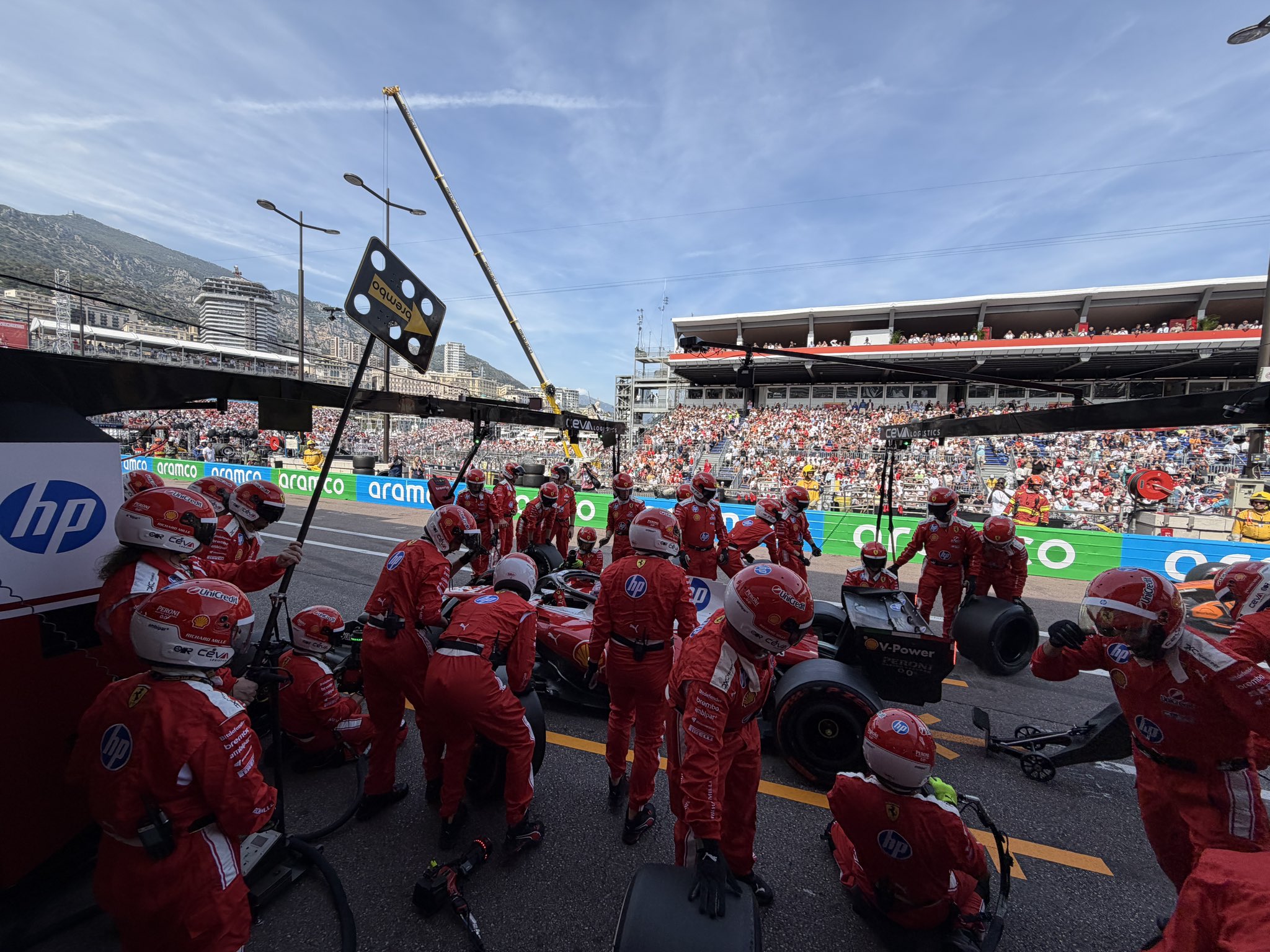
Instead, Ferrari left Monte Carlo with a second-place finish through Lewis Hamilton. A respectable result on paper, but one that looks considerably less impressive when the race pace is examined more closely.
Before the various interruptions and neutralisations caused by the Safety Car and the red flag, Lewis Hamilton was already trailing by around 30 seconds. Charles Leclerc was only slightly closer, and there were still approximately 20 laps remaining.
The superiority displayed by Mercedes shattered Ferrari’s ambitions and exposed several weaknesses of the SF-26. The race highlighted Ferrari’s inability to extract enough performance from its current development programme, difficulties in improving the car from Friday to Sunday, the lack of downforce repeatedly mentioned by Lewis Hamilton and the brake-related concerns identified by Charles Leclerc after his accident.
Whether those brake issues were linked to hardware or software choices remains to be determined, but they represent another item on an increasingly long list of areas requiring attention. There is also the issue of engine power, with Ferrari still lacking performance compared to Mercedes.
The list of improvements required to fight consistently for victories remains significant. Yet despite all these shortcomings, Ferrari currently appears to be the second-best team on the grid behind Mercedes.
Red Bull suffered an immediate retirement for Max Verstappen before the race had truly begun, while McLaren endured another difficult afternoon, losing Lando Norris to retirement and seeing Oscar Piastri struggle with a car that simply lacked the pace to challenge at the front.
There is little time to reflect. Formula 1 now moves quickly from Monaco to Barcelona, where the Spanish Grand Prix will take place next weekend. A completely different circuit, different technical demands and a new challenge for both the cars and the power units.
Antonelli, meanwhile, will be hoping that the competitive order remains exactly as it is. Because sooner or later, it becomes impossible not to look further ahead.
If Monaco is any indication, Mercedes and Andrea Kimi Antonelli are no longer simply leading the championship. They are beginning to shape the future direction of the 2026 Formula 1 season.


Leave a Reply