Ferrari isn’t concerned with Red Bull. At the Bahrain circuit in the first day of Formula 1 pre-season testing session, the maximum focus of the Maranello technicians is on themselves. Although the RB20 shows a very interesting design, with a unique car cooling system where various components contribute to cooling, the Prancing Horse has put the red car on the track to kick off the validation of Project 676.
We’re talking about a very long process that will find the first real interesting feedback only in the first race of the 2024 Formula 1 season. The same scenario, Bahrain, where the cards will finally be laid on the table. Meanwhile, the first taste of third-generation cars within the current regulations is present. An important technical-sporting narrative to gather references that will be useful later in the championship.
In the first part of the morning, the Maranello team took to the Sakhir track with the car full of rake sensors. Many aerodynamic sensors to record every detail regarding the functioning of the aerodynamic package. The same goes for the suspension mechanics, using precise data collection techniques to then find correlation in the virtual context.
Ferrari SF-24: a lot of adaptation work on the new front suspension with the first raised arm

The work program of the historic Italian team was divided into two phases. First, the Monegasque driver dedicated himself to fine-tuning the red car. The primary goal of the engineers was to check the car’s setup regarding ride height. This is a very delicate issue for these wing cars, as ground heights can make a big difference in the generated load.
For this reason, we witnessed various suspension changes to test the distance from the asphalt and, simultaneously, the mechanical goodness of the car. Ferrari intervened on the length of the front push-rod, adding a change to the anti-roll bars to manage understeer better and avoid some very annoying micro-lockups when entering corners.
In terms of handling, we can say that in certain situations, especially in changes of direction, the car became unsettled, a sign of a front-end not yet perfectly integrated with the setting. For this reason, the front end was stiffened with a more pointed setup, more similar to Red Bull’s setup, still acting on the suspension’s pivot.

All the changes made had a positive impact on the car. In fact, in the second and third stints on the track, the red car showed significantly improved drivability compared to the previous runs. This is evident from the ease of reaching the apex of various difficult corners and good traction on exit. In this sense, it is important to emphasize the excellent reaction of the car to changes.
Ferrari SF-24: high-fuel configuration to test tire management
In the late morning, Ferrari’s work program shifted to high-fuel testing. We are talking about a substantial long run that the Monegasque driver developed in two parts. Thanks to the information collected by the editorial team of FUnoanalisitecnica directly in the Bahrain pit lane, we know that the fuel load was very high.
The information related to lap times is not important at this stage. Comparing the cars is very difficult. We will try to do it later with all the ifs and buts. Therefore, it is easier to understand the approach of the red car in this configuration. Observing with extreme skill the F1-TV on-board footage, we can say that the SF-24 car in Charles’ hands behaved well.
A car equipped with Pirelli C3 tires. The pace was relatively constant with a lot of fuel on board, considering that Charles often lifted a bit. Moreover, we must emphasize that the mappings of power unit 066/10 were very low. The K2 (overboost) was used purely in sector 2, to optimize performance on the straight leading to turn 11.
Various tests on the hybrid part also aired to configure the recovery of horses from the motor-generators, MGH-H and MGU-K, to spread the approximately 160 horsepower available in the most efficient way. Observing the top shot, we can see the presence of sensors inside the side pods. These are thermal cameras to record as much data as possible on temperatures and tire management, which, as far as we know, seems to have improved compared to the 2024 Formula 1 racing season.
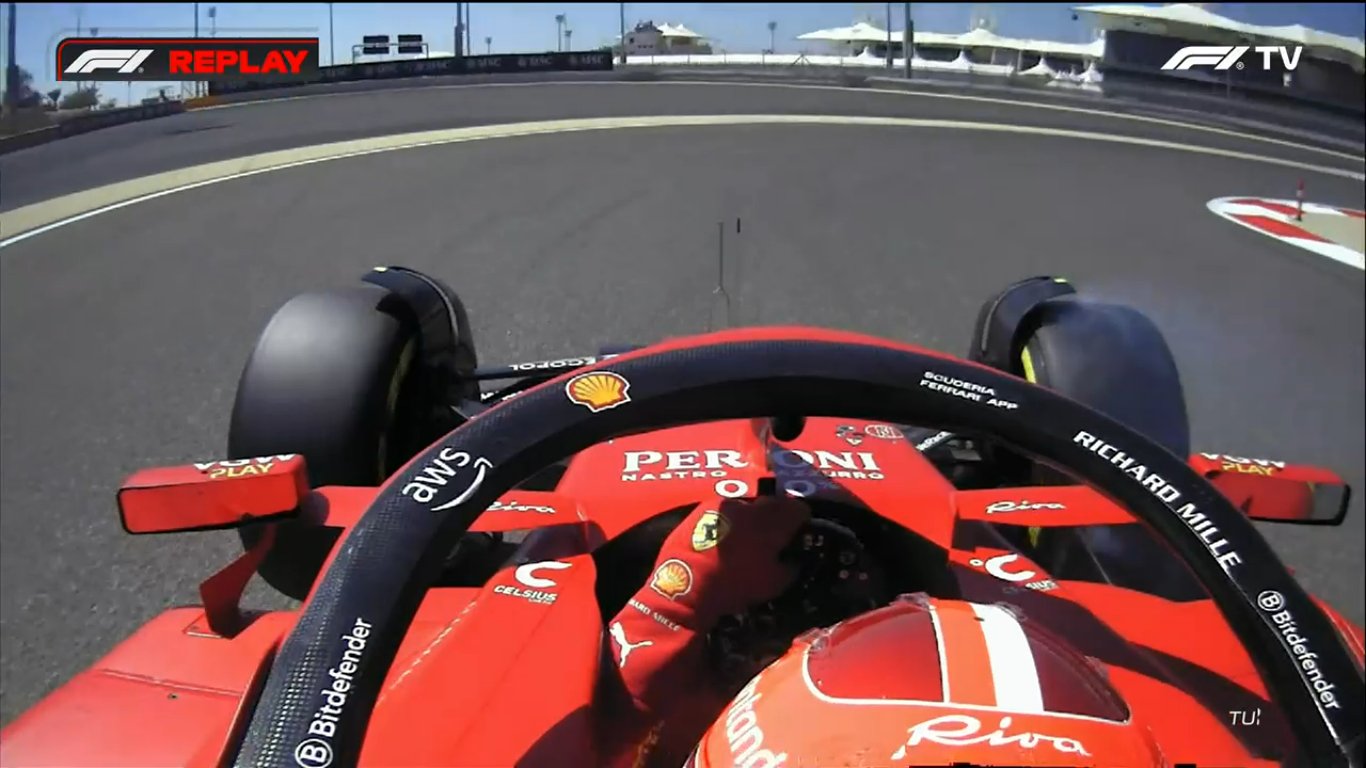
Source: Alessandro Arcari for FUnoanalisitecnica


Leave a Reply