
The source of this data is non-official. The telemetry data is sampled at a low rate and has been interpolated for clarity. As a result, the precision and/or integrity of the data cannot be guaranteed. The metric used here does not account for cars being held up in the pitlanes by other cars driving by in the pitlane, which possibly skews the data in favour of front-running cars.
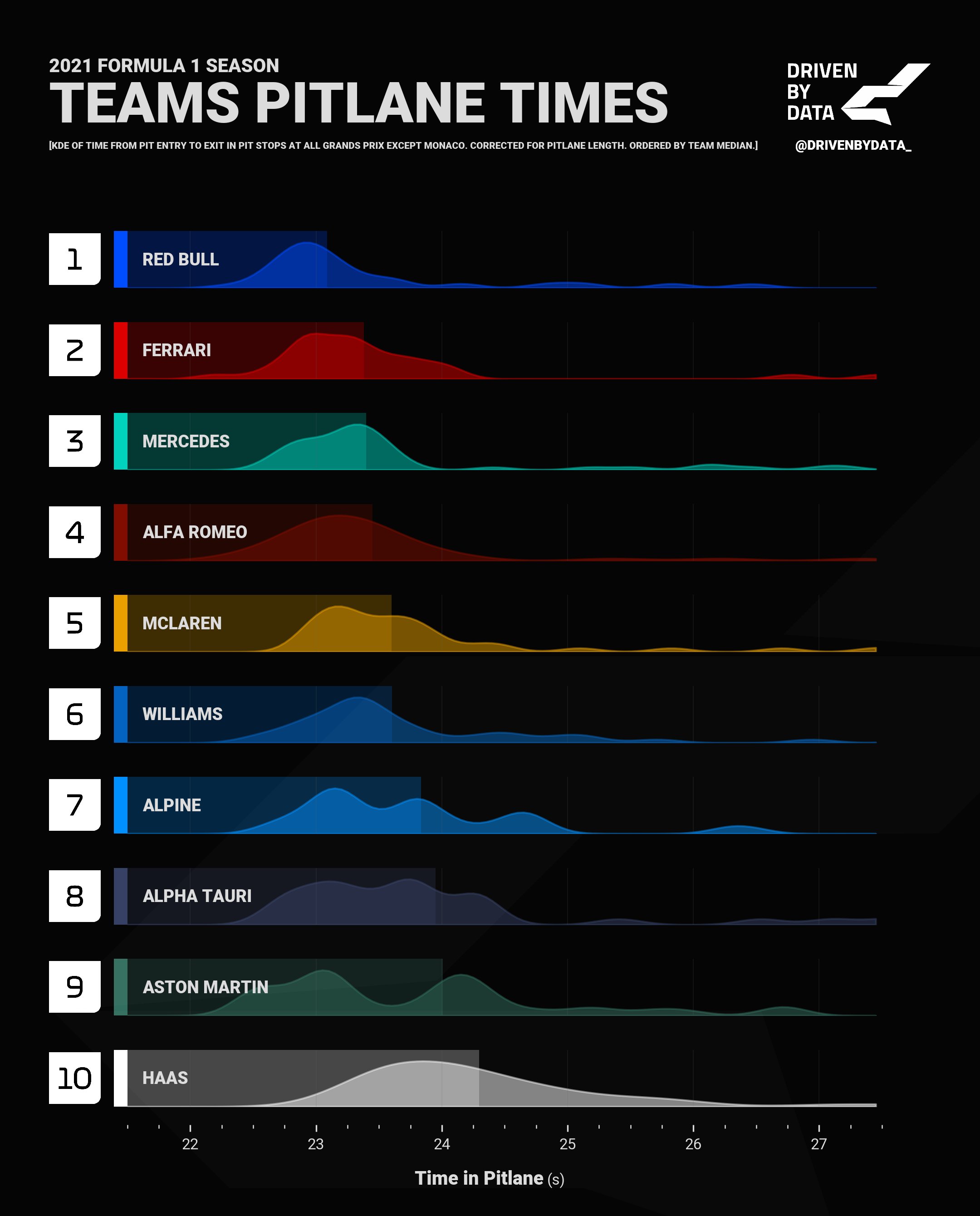
With time spent stationary in the box being the main factor in this metric, it is not surprising to see Red Bull, who have been the team to beat in terms of pit stops for some years now, coming out on top. What this metric can convey, comparing to actual pit stop times, is the ability to precicely slow down the car into the box and then swiftly pull away.
The only significant deviation compared to pit stop times is the fact that Alfa Romeo seem to somehow make up time elsewhere in the pitlane. This is very interesting, since Alfa Romeo have been known to pretty aggressively angle their pit box as to straighten the trajectory of the car when entering the pit box.
Show your support for Scuderia Ferrari with official merchandise collection from Puma!

This makes it much easier for the driver to get the car stopped precisely on his marks, theoretically handing the Alfa Romeos a significant advantage in braking for the box. The flipside is that the driver has a greater angle to overcome when exiting the box. But the “trick” here, and presumably the philosophy behind this entire tactic, is that when leaving the box you have the option of using a bit of wheelspin, forcing the car to rotate, with a negligible time loss.
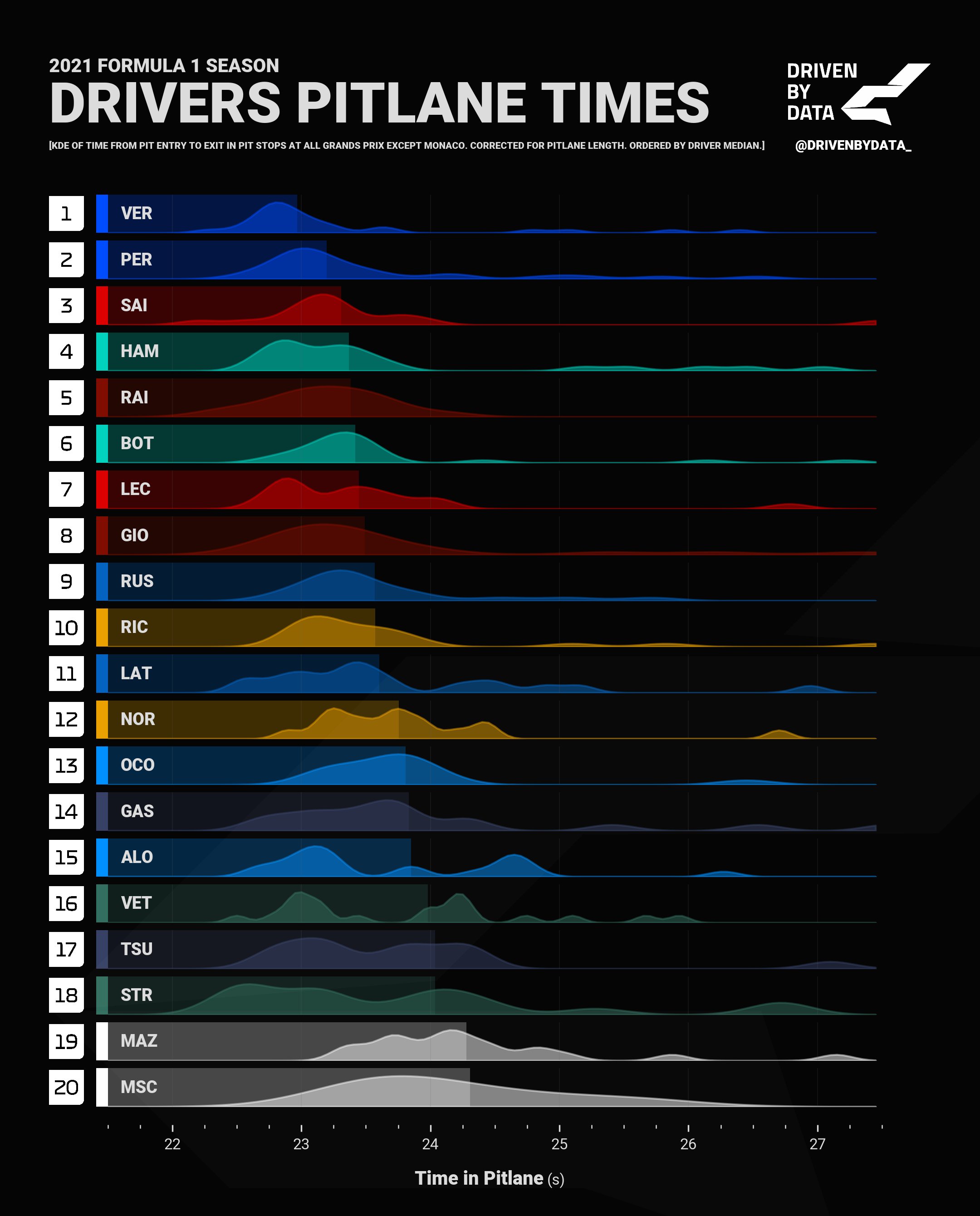
The dataset comprises 483 pitstops across 21 of the season’s Grands Prix (the Monaco Grand Prix is omitted since it has a lower pitlane speed limit). Horizontal bars indicate median speed for each driver/team, whereas the filled curve denotes the kernel density estimation of times taken to travel through the pitlane at all races, except for the Monaco. For each race weekend, the times have been corrected for a pit lane length of approx. 395 meters (the median pitlane length across the season).


Leave a Reply