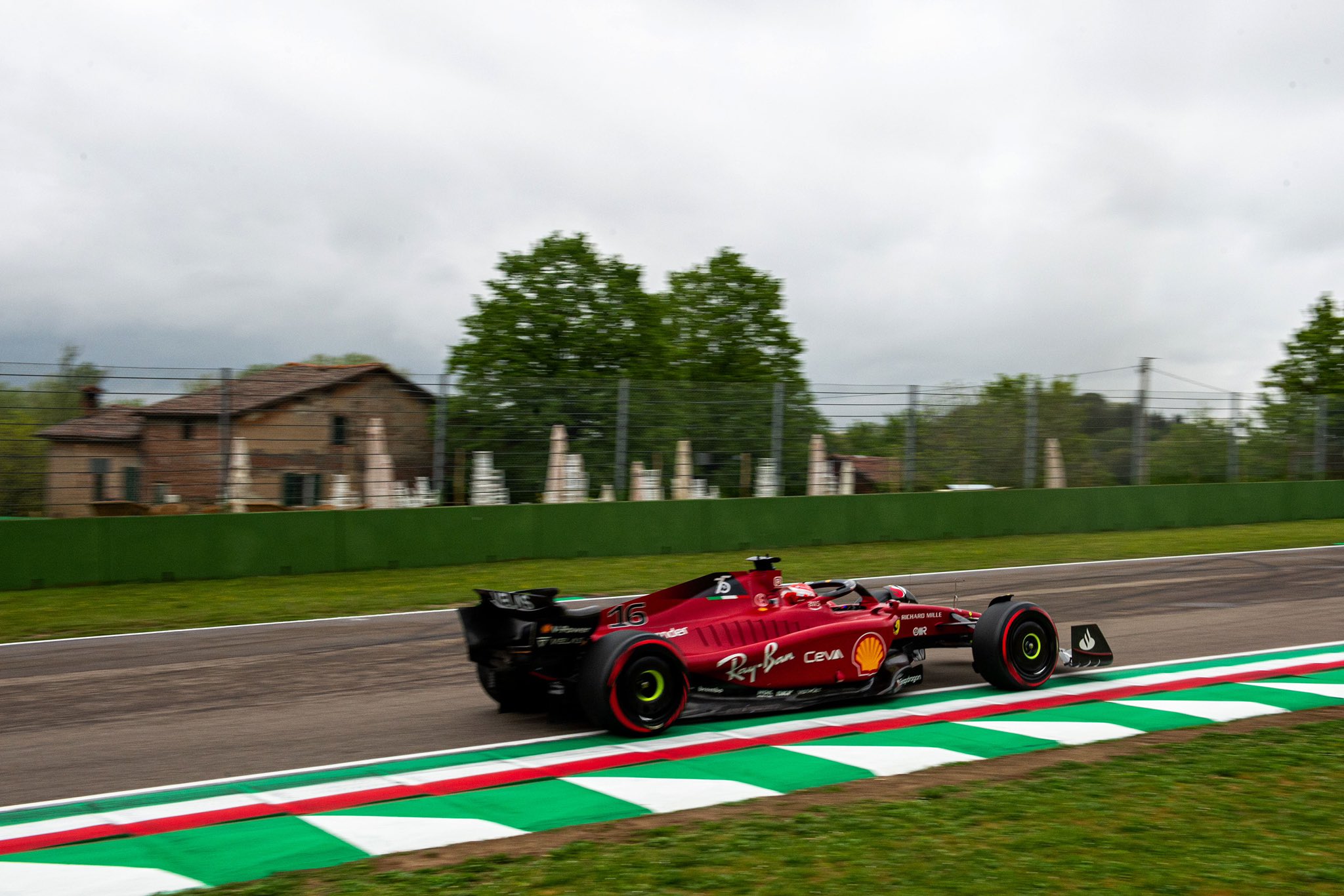
The Imola circuit, named after Enzo and Dino Ferrari, has a length of 4,909 m and features 19 turns, including 9 right-handers. There is only one DRS zone, located on the start-finish straight, with activation just before the entrance to the pit lane. The Santerno circuit is of an old-school style, built in harmony with the surrounding environment, featuring various elevation changes.
There are several iconic corners: Tamburello, Villeneuve, Acque Minerali, and Piratella. The teams will predominantly opt for medium-to-high aerodynamic load setups, considering the weather forecast for the weekend. Good traction is crucial to exit the slow corners on the track. Let’s explore the characteristics and secrets of each sector of the Imola circuit in this track analysis.
Sector 1
The first sector of the circuit starts with the false straight leading to the Tamburello chicane, composed of three turns. This is also where the first significant braking point of the track is located, which, according to Brembo data, generates 4.4 G of deceleration with 136 kg of brake pressure. Additionally, to be fast at Tamburello, it is important to attack the curbs while avoiding the bumps placed on the inside. After exiting, there is a short straight leading to the Villeneuve chicane, a fast left-right sequence. Here, the drivers will lightly apply the brakes to enhance their entry speed, experiencing decelerations of 2.9 and 4 G respectively.
Sector 2
Immediately after the fast chicane, the second sector begins, leading to the Tosa corner, which passes under the Hills of Passion. Here, the track starts to ascend in altitude towards Piratella, a blind left corner that leads to one of the most beautiful sections of the racetrack, Acque Minerali (Mineral Waters). This section consists of two corners at the end of a descent, making it quite challenging. According to Brembo data, the braking in turn 12 is not very demanding but will be done with a slight trail-braking technique.

Show your support for Scuderia Ferrari with official merchandise collection! Click here to enter the F1 online Store and shop securely! And also get your F1 tickets for every race with VIP hospitality and unparalleled insider access. Click here for the best offers to support Charles and Carlos from the track!
Sector 3
Exiting Acque Minerali, the third sector opens up as the track climbs towards the Variante Alta (High Chicane), now renamed Variante Gresini, preceded by a significant braking point. In fact, according to Brembo data, Variante Gresini and Rivazza 1 are the most demanding corners for the brakes, with a maximum deceleration of 4.5 G. Similar to Tamburello, the drivers will tend to cut the first curb for a better exit, but the risk of losing control is high. After the Variante Alta, the circuit descends towards the two left-hand corners of Rivazza and rejoins the start-finish straight.
Pirelli: Updates for wet-weather tires
For this week’s event, the Italian tire manufacturer is introducing several new features. Among them are the compounds designed for wet track conditions and the compounds to be used during qualifying sessions. If the weather improves, Pirelli has chosen to bring the softest slick tires available in the F1 range, namely the C3, C4, and C5 compounds. Compared to last year, softer compounds have been selected, similar to those used in Baku. According to Pirelli, these compounds could allow for more strategic variety, providing teams with more alternatives. The asphalt is moderately abrasive, despite having been laid several years ago.



Leave a Reply