Clues from the Brazilian Free Practices
The first and only free practice session of the São Paulo Grand Prix certainly did not provide significant certainties or reference points. Many teams worked with the aim of saving sets of tires for the weekend at the Interlagos circuit, although their frugality may prove unnecessary given the high risk of rain for qualifying. We have seen entirely different on-track work programs among the various teams and even some peculiar attitudes, like McLaren, which tried only 2 sectors on a new set of soft tires, then returned to the pits without completing a lap. The teams seem focused on preserving the soft compound tires, raising doubts that degradation may be less than expected, allowing them to use the red-banded tires for either the sprint race or the main event.
For these reasons, analyzing the telemetry from the dry laps appeared entirely meaningless, so we focused on the race pace simulations, from which we also extracted average telemetry.
Red Bull as the Favorite
Of course, drawing conclusions from this single session is particularly challenging. However, we can at least express the impressions gathered. First of all, the uniqueness of Red Bull’s work stands out as they covered the entire session with a single set of hard tires with both drivers. In the race simulation, both Max Verstappen and Sergio Perez showed similar and consistent lap times, but they were notably slow. The RB19’s slowness in the turns 6-7 confirms that it is a heavy car with much less performing tires compared to the competition. Only at Milton Keynes do they know the actual potential achievable in these conditions by the car, but given the safety with which they conducted the program, they are the clear favorites. It’s difficult to rank Ferrari, Mercedes, and McLaren behind them. The Woking team appears to have a good baseline setup, with the car responding well in slow corners and then maximizing performance in the faster ones, which is the MCL60’s forte.
How Ferrari Performed
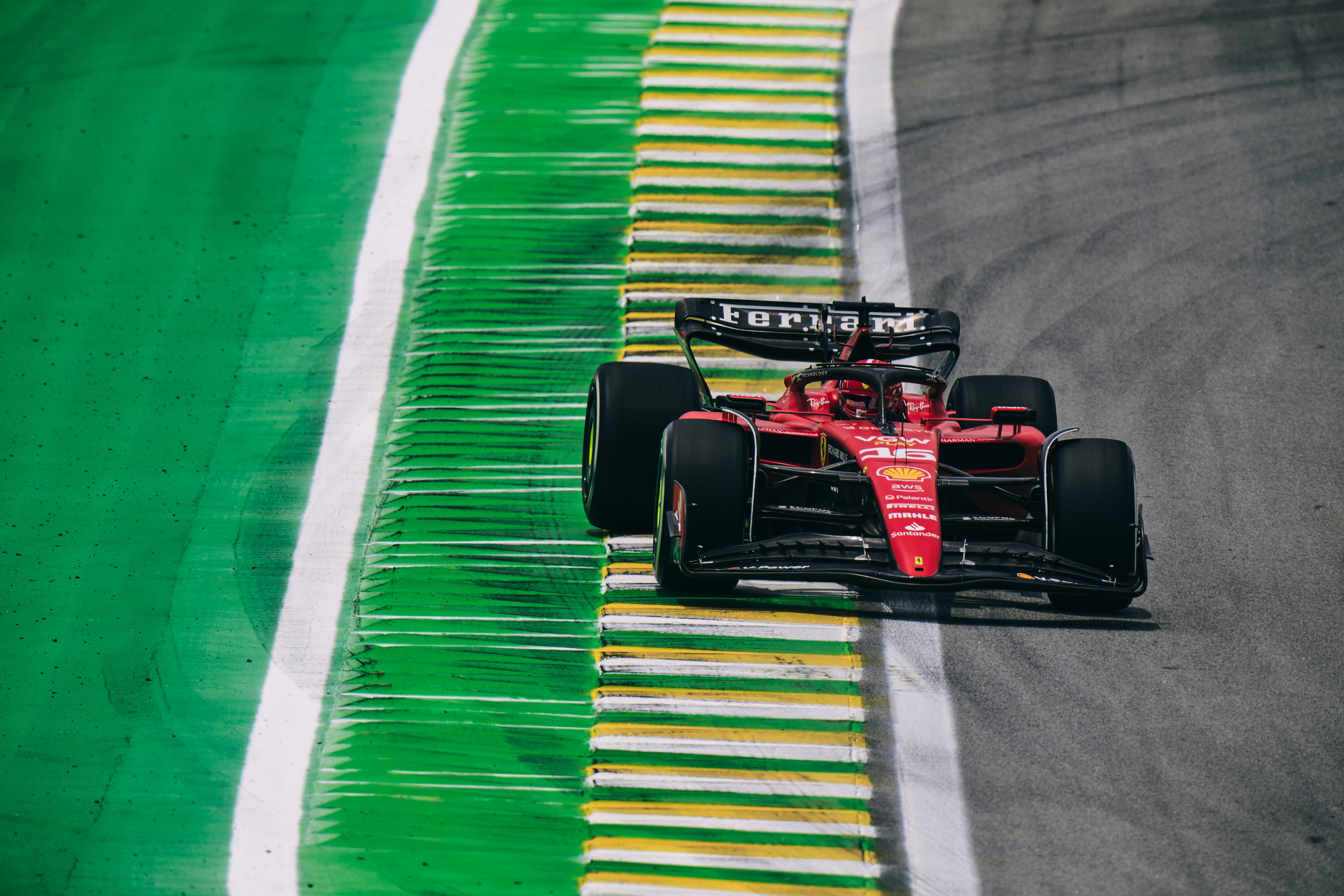
Ferrari, on the other hand, responds with high straight-line speed and a good tire degradation sensation, although the dry lap seems less precise than usual, with noticeable understeer that the drivers have to contend with. The fact that Charles Leclerc and Carlos Sainz set the top two times should not be misleading, as they did it with soft tires, having only a tenth of an advantage over George Russell, who used medium tires. The SF-23 appears once again with less downforce than its competitors, as is now customary due to the car’s limitations, but with a balance that still needs optimization.

Show your support for Scuderia Ferrari with official merchandise collection! Click here to enter the F1 online Store and shop securely! And also get your F1 tickets for every race with VIP hospitality and unparalleled insider access. Click here for the best offers to support Charles and Carlos from the track!
The Mercedes Approach
Mercedes, on the other hand, appeared to be in good form, but it’s also the team that’s a bit more mysterious to interpret in this session. The overall impression is of a well-balanced starting setup for the W14, and a car with a lot of aerodynamic load, considering their slower straight-line speeds. This would bring performance to be optimal in fast corners for Russell and Hamilton, as indeed confirmed by the average telemetry, but with somewhat unusual tire degradation as laps progress compared to these premises. The conclusion could then be that the Brackley team has some performance up their sleeve, not fully displayed in this session because the two W14 cars may have run with a considerable amount of fuel on board. It is also interesting to see that the performances appear to unite various teammates, confirming that, from a driving perspective, they haven’t pushed the limits very much for now, and thus the general performance limit was what the car delivered. We will see if qualifying can tell us more about the competing teams or what will happen in the event of rain, where driving will take on a crucial aspect, combined with the ability of the cars to make the wet tires work.


Leave a Reply