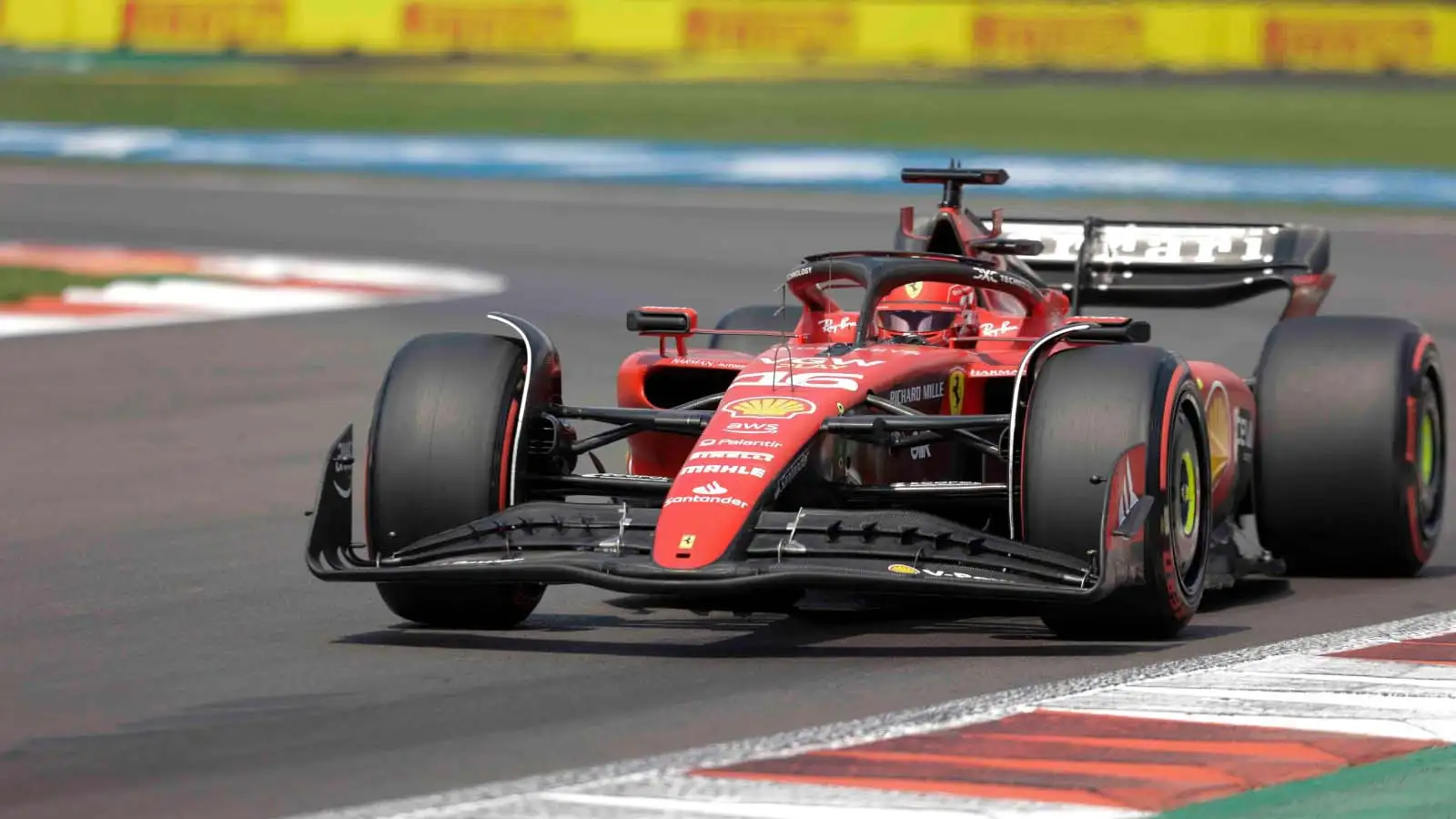
The Ferrari SF-23 car, during the first day of free practice at the Mexican GP, confirmed a good feeling with the right setup choices in FP2. The rear aerodynamic configuration allowed the red car’s drivers to have a strong car in slow corners, capable of achieving the highest top speeds. Charles Leclerc, furthermore, showed promising pace with used yellow tires, making the prospects for the race look good. However, difficulties arose in managing power unit and brake system temperatures because the thin air in Mexico does not allow for usual cooling.
McLaren has the most precise car in corner entry. Norris, who set the second-fastest time, has a car that responds to steering inputs and is agile during the rotation phase. Additionally, the pace of the MCL60, based on consistent lap times, suggests a possible battle with Red Bull on Sunday. The reigning world champion dominated Friday’s sessions. Verstappen doesn’t have the best car in terms of top speed and cornering performance, but he manages to achieve the fastest time thanks to his consistency across all sections of the track.
Mexican GP 2023/Telemetric Analysis TS: SF-23 Makes Good Use of DRS, MCL60 Struggles on Straights but Has Better Corner Entry

Telemetric charts related to the second free practice session show the three aspects mentioned earlier. Starting with the analysis of the first third of the track, we can observe Charles Leclerc’s superior top speed, Norris’s minimum speed at the center of the corner, and Verstappen ultimately setting the fastest time in TS. Max makes a difference in traction, particularly in the direction change between curves 1, 2, and 3, where he can get on the throttle earlier than his rivals.

Source: FUnoanalisitecnica
The SF-23 capitalizes on the horsepower of its power unit and the lower aerodynamic load of the rear wing to achieve the best straight-line speed: 351 km/h. Additionally, car #16 performs well in changing direction between turns 1 and 2. A change to the front suspension anti-roll bar settings during FP2 allowed the Monegasque driver to have more agility in corner entry.

On the other hand, McLaren faces high resistance on the straights. It’s noticeable how the speed difference at the finish line between Norris and Charles Leclerc was over 4 km/h, which became 9 at the end of the straight. However, in the exit of turn 3, the British driver is the most effective due to better traction provided by the rear suspension. Nevertheless, as previously mentioned, MCL60 #4 has a lower maximum speed at the braking point of turn 4 compared to its competitors.
Show your support for Scuderia Ferrari with official merchandise collection! Click here to enter the F1 online Store and shop securely! And also get your F1 tickets for every race with VIP hospitality and unparalleled insider access. Click here for the best offers to support Charles and Carlos from the track!
Mexican GP 2023/Telemetric Analysis S2: RB19 Handles Load Transfer Well. Max Lifts Off Less Than Rivals in the Snake
From the analysis of the middle sector of the track, you can notice the difference in load between the various cars. Ferrari and McLaren maintain their strengths. Verstappen, on the other hand, gains 5 km/h in braking for turn 6 and doesn’t lift off in turn 9, where other drivers need to partially lift off by 17% and 25%. This allows the young talent from Hasselt to set the best time in that sector again.

Source: FUnoanalisitecnica
The gap chart shows how the reigning world champion excels in making the difference between turns 4, 5, and 6. The great balance of the RB19 provides agility in direction changes. This is a delicate aspect as you’re seeking maximum grip from a car that tends to sway laterally towards the outside of the track during continuous load changes.
The composure offered by the suspension design allows for optimal use of traction in the exit, as evidenced by Max’s very early throttle application before turn 6. Shifting the focus to what happens between turns 7 and 11, you can see an RB19 with the highest percentage of throttle. Ferrari suffers from low minimum corner speed, losing significant speed in the corner traversal compared to Norris’s McLaren.
Mexican GP 2023/Telemetric Analysis S3: Leclerc Forced to Manage an Overly Rotational Ferrari SF-23. RB19 on Throttle Earlier
The third sector opens with the use of DRS for the last time. The red car, which achieves the highest top speed in turn 12, manages to limit the damage in the minimum speeds of the slow corners. Before entering the stadium section, Charles Leclerc is forced to brake earlier than his competitors to manage a rear that is more unstable, resulting in him being about a tenth and a half behind Lando Norris. In general, the Monegasque driver is gentler on the throttle, and in the exit of the turn at 14, he is forced to lift off to control the excessive rotation of the car.

Source: FUnoanalisitecnica
McLaren excels in preserving tires throughout the entire lap. Norris manages his car very well during corner entry, finding and attacking curbs with extreme ease. Verstappen is the best in both the exit of turn 12 and turn 16, managing to get on the throttle earlier than his competitors thanks to the quality of his Red Bull RB19.
Mexican GP 2023/Telemetric Analysis by Type: Norris Has the Lowest Minimum Speed. Ferrari SF-23 Pays the Price for Aerodynamic Load
Finally, to summarize what was described in the article regarding minimum corner speeds, we present a chart that considers the average speeds below and above 115 km/h. This analysis focuses on the performance of cars in slow corners where mechanical grip is essential and in medium-speed corners where aerodynamic load is emphasized.
The upper part of the chart shows that Lando Norris excels in slow corners. The Englishman manages an average speed that is about 4 km/h higher than his rivals. Charles Leclerc holds his ground well, despite a rear that is unstable during entry.

Source: FUnoanalisitecnica
Lower down, you can see which cars generate the most aerodynamic load. The MCL60 is once again one of the best cars in this regard. The Ferrari SF-23, on the other hand, displays a lighter car that compels drivers to leave around 7 km/h on the table at each turn of the track. Hamilton and Perez are the best in their respective teams in this regard. Lewis benefits from the upgrades brought to Texas and “only” lags behind Norris by 3 km/h.
Source: Leonardo Pasqual and Alessandro Arcari for FUnoanalisitecnica


Leave a Reply