
The Zandvoort circuit has several corners with medium-low speeds and just a few straights. The teams therefore chose to increase the level of downforce for the Dutch Grand Prix with the aim of improving traction and cornering grip at the expense of higher top speed. In this comparison, we see the rear wings chosen by the Formula 1 teams to tackle the corners of the Zandvoort circuit, which will host round no. 15 of the 2022 Formula 1 calendar.
Ferrari vs Red Bull: RB18 with a slightly lower downforce
The two cars that have represented the performance benchmark since the start of the 2022 F1 season have slightly different solutions for this round. The Maranello team has chosen a rear wing with a heavier main profile for its F1-75. The main plane has a slightly longer shape and a more evident spoon profile, useful elements to generate more downforce. Also on the movable flap there is also a small nolder, which will probably undergo changes, as seen in Belgium.
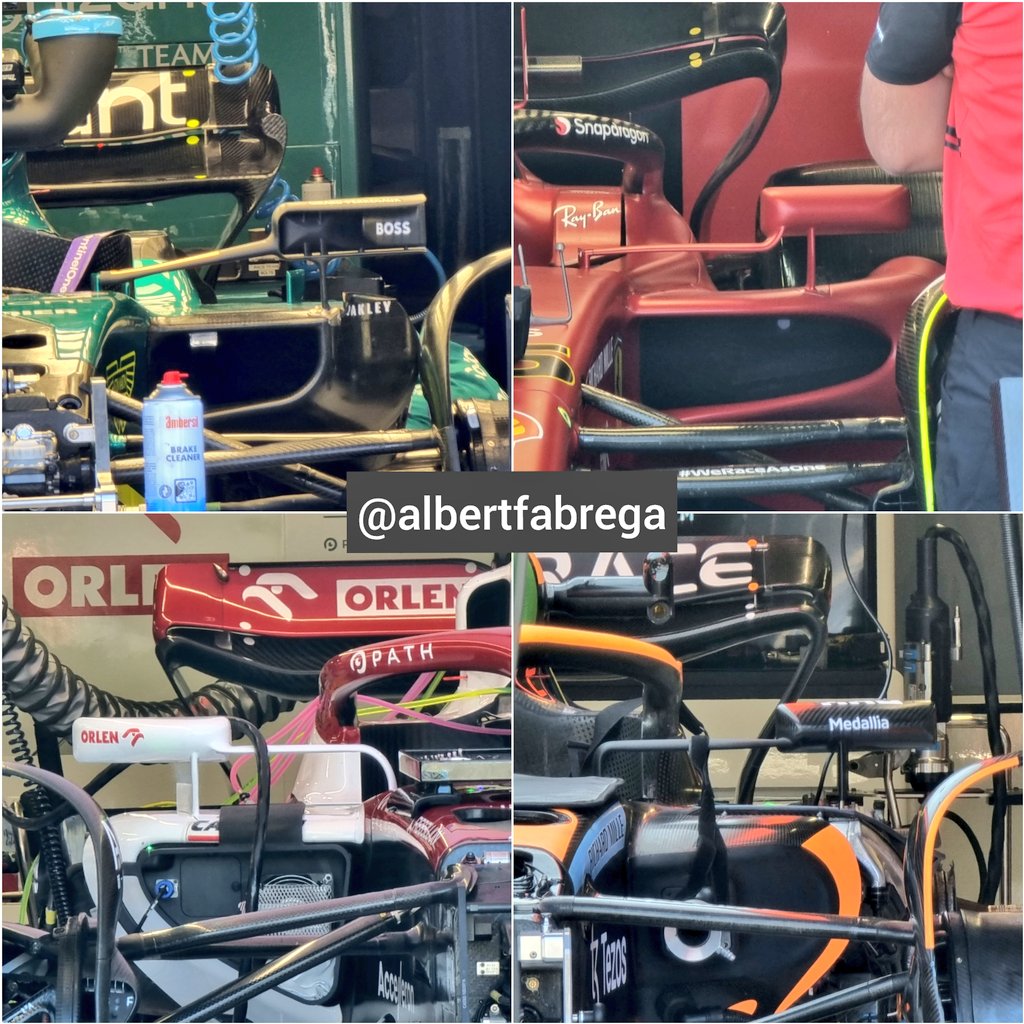
Slightly different choices for the Anglo-Austrian team, the main profile has a lower thickness and a less accentuated spoon profile. Observing the movable flaps we notice how the one mounted on the Red Bull RB18 is slightly more extended in the longitudinal direction. This configuration could leave more space for the air incident on the wing, improving the effectiveness of the DRS.
Aston Martin confirms the wing used in Hungary
The English team, after having impressed everyone in the Hungarian stage, has decided to use the new wing for the Dutch appointment. In fact, the extension of the endplate is clearly visible, simulating the wings used until last year. In addition to this solution, there is also a small nolder on the AMR-22 to find that small extra percentage of downforce.

High-load rear wings for other Formula 1 cars
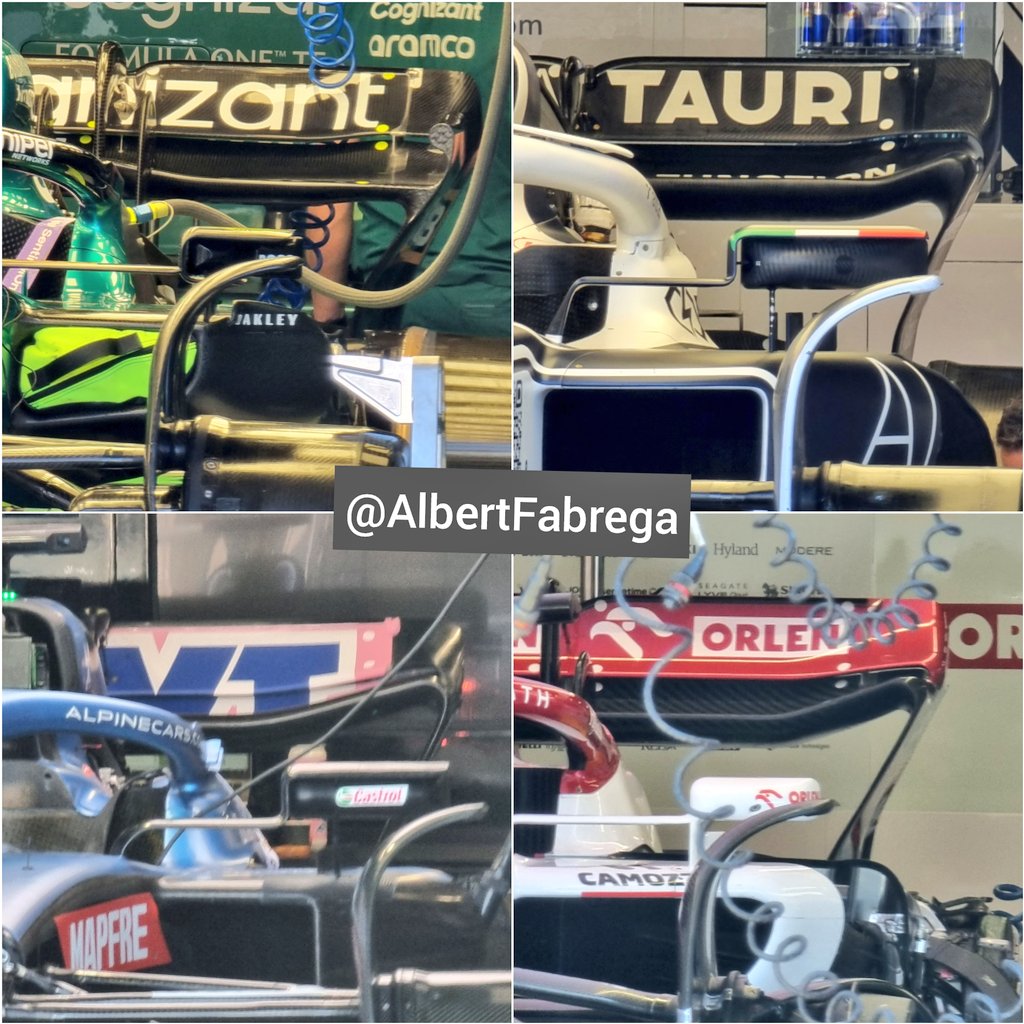
The other teams also brought high-load solutions, but with differences between various cars. Starting from McLaren we notice some similarities with the wing mounted on the Ferrari F1-75, characterized by a pronounced spoon profile and a main plane with an accentuated thickness. Unlike Ferrari, on McLaren we do not find the small nolder mounted on the mobile flap.
At Alpine we find a different solution: the main profile has a constant thickness along its entire extension. This choice certainly brings advantages from the point of view of downforce, but leads to definitely higher drag.
Show your support for Scuderia Ferrari with official merchandise collection from Puma! Enter the online Puma Store and shop securely! And get your F1 tickets for every race with VIP hospitality and unparalleled insider access. Click here for the best offers to support Charles and Carlos from the track!

Similar choices for AlphaTauri and Williams who opted for main planes with linear geometry and an accentuated thickness. The Swiss team has also mounted a high-load profile, with the central area of the wing positioned very low to accentuate and lengthen the chord of the main plane. A particularity of this wing is the mobile flap: in fact comparing it with other solutions it seems to have a greater angle of incidence; this solution certainly helps in generating downforce, but it also brings with it an increase in drag.


Leave a Reply