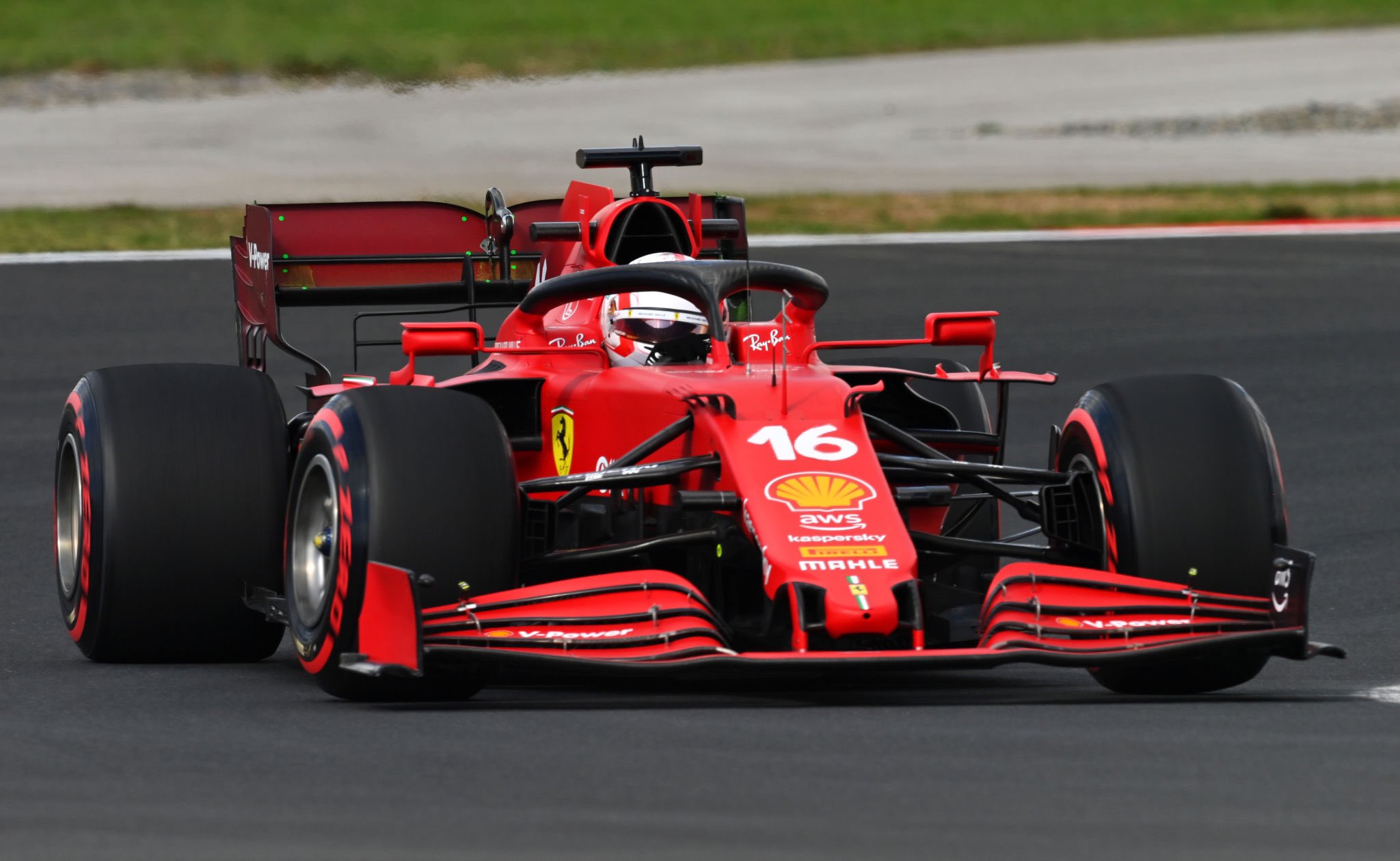
The rain in Istanbul could sweep away Ferrari’s hopes of entering the challenge at the top in the qualifying session for the Turkish GP. We know that the SF21 cat does does not excel with rain tires, so today’s weather variable could upset the plans of the Maranello team which, on the other hand, in yesterday’s free practice was happy to see a complete confirmation with the simulation data that the Scuderia has prepared ahead of this appointment at Istanbul Park.
At Maranello they were satisfied with the work done, a sign that homework is starting to give results that can also be seen on the track. The first consideration to make, therefore, is that that of the second SF21 behind Lewis Hamilton’s Mercedes for just 166 thousandths of a second is not a surprise, but the fruit of a certain type of commitment.

If we analyze the telemetry developed by Motorsport Italy, some interesting considerations emerge: Charles Leclerc came within a whisker of the Mercedes driver with a car that has best taken advatnage of the greater grip given by the Turkish asphalt, but that was not the only positive aspect. At the same time we have to take into consideration that Hamilton used the 4 engine on the W12 (only the 6-cylinder turbo and not the rest of the power unit) and, therefore, was capable of expressing a fresh unit at the first kilometers of life, while on the SF21 car of the Monegasque driver there was a rotating power unit that did not even have the new hybrid system which we will see in action today.
It must be said that both cars ran with very conservative engine mappings, but it certainly does not escape the analysis of the corners that the PU of the Maranello team resorts to “clipping” at the end of the straights with the highest speeds, because the electrical energy of the hybrid ends before that of Mercedes. Not surprising, given the Ferrari engine step which was not the most recent.

Show your support for Scuderia Ferrari with official merchandise collection from Puma!
Mercedes revealed excellent track adaptability in terms of both single lap and long runs, looking favourite for pole position with Hamilton, before falling back 10 positions on the grid for the penalty due to using the fourth engine.
If the black arrow emerges in the speed peaks and acceleration from tight corners, Ferrari stands out at the point where in the past Felipe Massa was able to make a big difference, namely the distance of the legendary Turn 8 towards the braking point of 9. The line of the two tracks, beyond the two intersections that photograph the proximity of the performances, is clearly in favor of Charles Leclerc who arrives at braking with 8 km / h more speed, confirming the SF21 as the fastest single-seater in the second sector of the track .

All this means something: the Maranello team is taking advantage of the time made available by Pirelli in the development of the 18-inch lowered tires that will be introduced next year on the ground-effect single-seaters. The data that emerged from the development work for 2022 also gave some keys to understanding how to bring the tires in use currently in the right temperature window, when the SF21 is able to guarantee the necessary energy, especially on the front tires.
In Monte Carlo, rather than in Baku and Silverstone, we saw the SF21 behave with the same approach that they pleasantly discovered yesterday in Istanbul. The smiles inside the Racing Department clash with the realism of the team on the track that does not want to concede any illusions, before having to deal with the rain.


Leave a Reply