Stable technical rules will be the foundation of the 2024 and 2025 championships. This act is necessary before Formula 1 undergoes another regulation upheaval in 2026, affecting all areas of the race car: engine, aerodynamics, dimensions, and weight, which are intended to undergo a substantial trim.
If in 2023, to attempt to calibrate the regulatory texts after the introduction of technical directive 039, Formula 1 had made changes to the floor area and the operating height of the cars, everything is now frozen for the upcoming championship. This also includes the tire aspect, which was modified in characteristics at the Silverstone Grand Prix.
F1 2024: Risks for tires due to increased downforce?
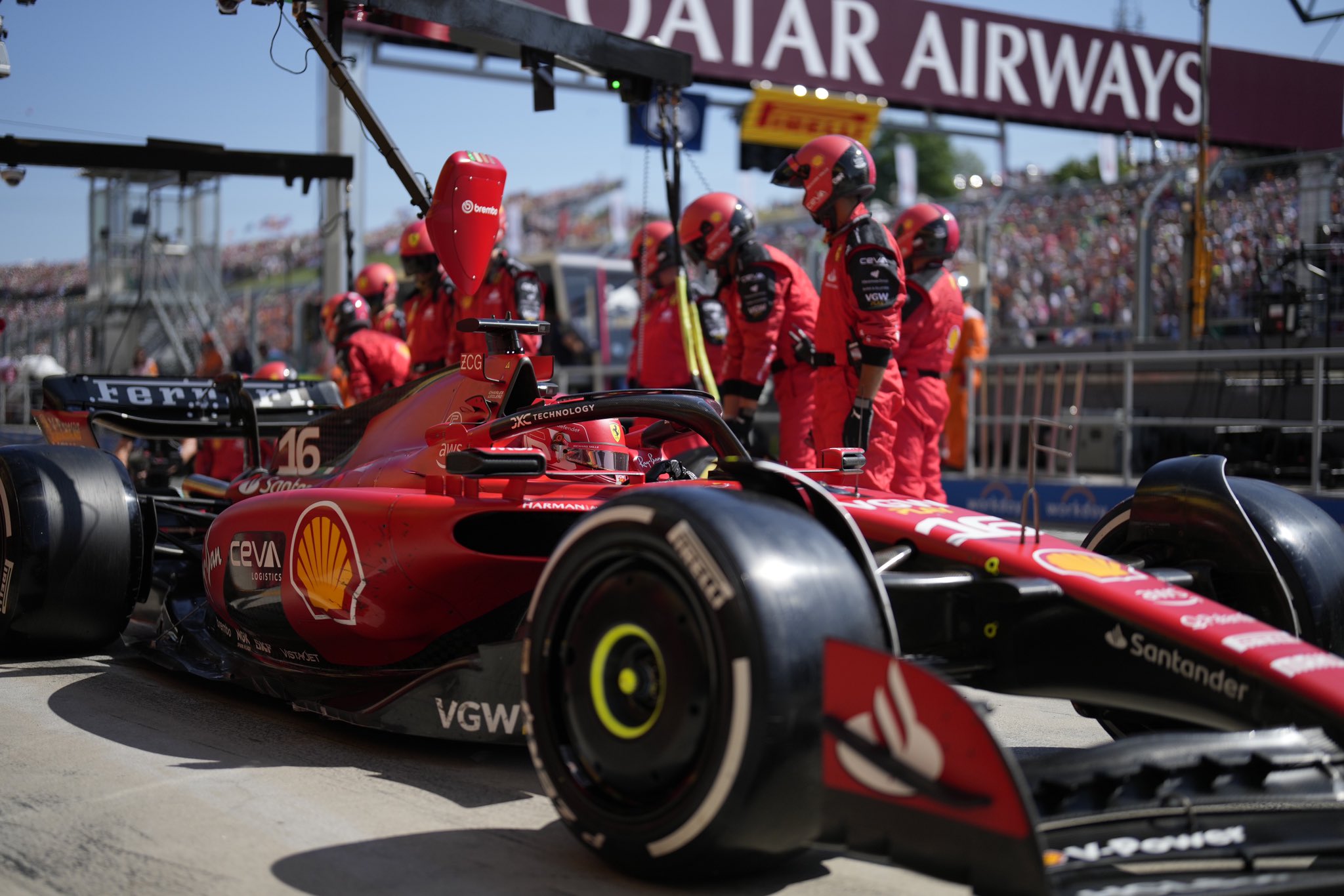
The mid-season change was necessary to respond to the increased level of aerodynamic load generated by the cars, which was higher than calculated computationally. A problem that could recur since vertical thrust, thanks to the evolution of the cars, could increase significantly, perhaps more than Pirelli anticipated.
The alarm was raised by Andrea Stella, team principal of McLaren, who issued a warning to motorsport stakeholders: Formula 1 will need to monitor the increase in aerodynamic load levels as this could impact the safety and performance of Pirelli tires in 2024.

The tires, as mentioned earlier, will maintain the characteristics and specifications of those used from the British Grand Prix onwards. Only the C0 compound, never used in 2023, will be eliminated. The classic classification remains: C1 will be the hardest, progressing to the softest C5.
Show your support for Scuderia Ferrari with official merchandise collection! Click here to enter the F1 online Store and shop securely! And also get your F1 tickets for every race with VIP hospitality and unparalleled insider access. Click here for the best offers to support Charles and Carlos from the track!
“If we look at some events, this year we certainly had some extreme parameters in terms of tire starting conditions, especially regarding pressure. To what extent can we push just to protect the tires? That said, if you think about Las Vegas, the initial pressures were very, very high. I think some riders might have touched 30 psi during the race,” observed the former Ferrari engineer, who, however, expressed full confidence in the Italian tire manufacturer.

Pirelli, thanks to its expertise and years of experience, knows how to adapt. If it detects any changed technical needs, it will not hesitate to act on the fly, as it did during the past season. “We know that when it comes to safety, tires can be improved from one race to another,” Andrea Stella reiterated.
“We do a lot of tests for Pirelli. We have enough experience with the tire manufacturer; we are in good hands. Certainly, the tires undergo a heavy workload cycle. If you think about the starting parameters and look at the numbers of these F1 cars in terms of tire load, we are facing unprecedented figures,” concluded the manager from Orvieto.
The world of F1 has not always welcomed mid-season changes warmly, but when it comes to driver safety, there is little room for complaint because the FIA rightly does not want to hear objections or intend to proceed by derogating from it. Pirelli, after analyzing the collected data, believes it has a valid product for the coming year. While not ruling out changes if load levels turn out to be higher than expected, it is believed that the safety margin of the “Silverstone Specification” tires should be sufficient.
Source: Diego Catalano for FUnoanalisitecnica


Leave a Reply