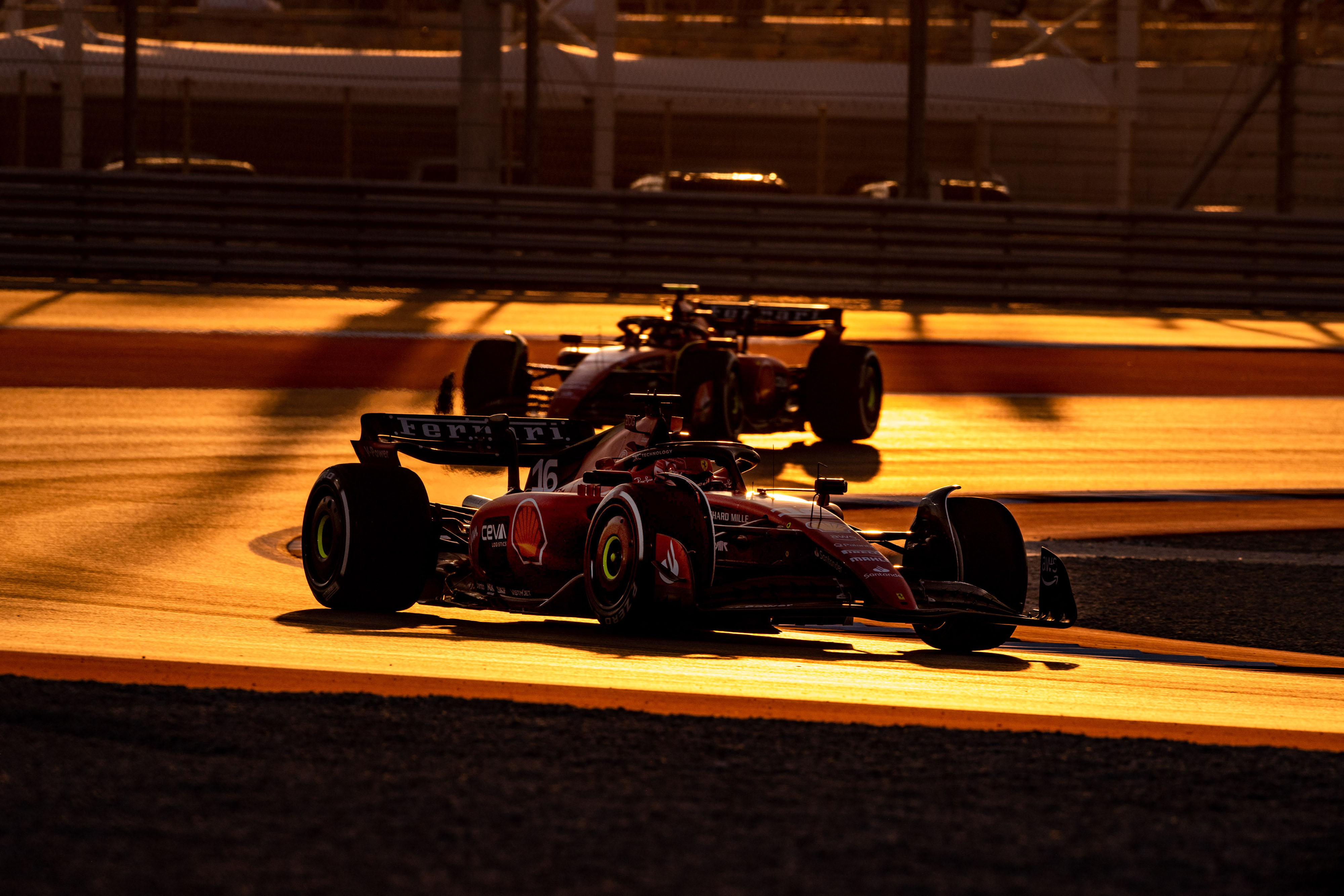
Like the other teams, Ferrari inspected the track to understand the percentages of bitumen and aggregates used for the road surface. They also needed to measure the macro and micro roughness of the asphalt, and during FP1, they had to validate every data point regarding grip and degradation, which would be useful for simulations throughout the weekend. Additionally, the curbstones are quite high, and there are often significant impacts with the cars.
Furthermore, as we clearly saw, the Qatari circuit had a lot of sand, making it very ‘green,’ meaning there was a lot of sand deposited along the meters of the track. Therefore, each team must continue its work on the setup while also considering the improvement of the track. They shouldn’t base the setup on the current track conditions.


Generally, all the cars were limited by oversteer at the rear, which means there was an excess of rotation. For this reason, at Ferrari, after the first stint on the Hard tires, they decided to reduce the front wing incidence by two points to shift the center of aerodynamic pressure to the rear, providing more grip to the rear axle. Observing the images coming from the pit lane of the Losail circuit, it seems that Ferrari also adjusted the mechanical setup. They acted on the stiffness of the front and rear anti-roll bars to change the mechanical balance and achieve a different vehicle body movement during roll. They also modified the front ride height by adjusting the third element.
With the yellow tire, Charles Leclerc expressed his satisfaction with the setup they reached. In the final minutes, they also tried a push-lap with the red tire. Leclerc lost control of the car when he reached the apex while going fast. This suggests that with the red tire, they might have some understeer, meaning a lack of rotation, which, when the driver accelerates, turns into oversteer. It’s not excluded that the understeer emerged towards the end of the practice when the track had cleaned up a bit.
In Red Bull, they once again complained about ‘entry instability,’ although with such a slippery track, it can be expected. In the entry phase, they lose the rear end, which is indeed unstable, triggering early and excessive rotation of the car as they approach the curb.

Overall, looking at the chart above, Ferrari must primarily work on putting all the sectors together, as Charles Leclerc loses four-tenths in the first one but remains very close to the top in the remaining two. McLaren seems to excel in the middle sector because they have a lot of vertical load. In the final sector, Aston Martin is fast, but Ferrari and Red Bull are competitive.
Show your support for Scuderia Ferrari with official merchandise collection! Click here to enter the F1 online Store and shop securely! And also get your F1 tickets for every race with VIP hospitality and unparalleled insider access. Click here for the best offers to support Charles and Carlos from the track!
In summary, we could say that the track today, being very dirty, generated a lot of oversteer, which posed a challenge for Red Bull, which typically has a front end that is too solid and a rear end that can be light if not properly addressed (as was seen in Singapore).
There’s also a relatively concerning factor. Coming to this circuit, in the preview, we discussed how the track imposes a lot of thermal stress on the tires. From the onboard cameras of both Ferraris on the medium compound, it was evident that the display highlighted how all four tyres of the car were overheating. This could lead to more tire degradation for Ferrari, and between today and tomorrow, they will need to understand how to reduce the temperatures. This is because they could encounter the phenomenon of blistering, which occurs when the car slides excessively and raises tire temperatures. However, long runs were not tested today, so we cannot confirm this overheating issue yet.

Overall, in terms of qualifying pace, Fernando Alonso appears to be the second-strongest force with his Aston Martin. Ferrari seems solid and is currently the third-strongest on the track. McLaren is currently the fourth-strongest, followed by Mercedes, approximately two-tenths behind.
Source: Alessandro Arcari and Niccoló Arnerich for FUnoanalisitecnica


Leave a Reply